

Welcome to the internet’s new favorite rollercoaster ride: AI Overviews—a place where search results get smarter, marketers get sweatier, and your website either skyrockets or cries gently into its metadata.
If you’ve been wondering why Google’s search results suddenly look like they’re narrating your life like a friendly digital butler, it’s because AI Overviews are officially becoming the new front page of the web. And if you want to stand out in this brave new world, you’re going to want a guide—a quirky, strategic, Thinkster-esque guide that not only explains what’s happening but helps you crush it.
Let’s dive into everything you need to know—from what AI Overviews actually are to how you can dominate them with powerful SEO services, technical SEO, and yes, even the superhero cape of the industry: white label SEO services.
Grab your favorite beverage; let’s nerd out.
What Are AI Overviews?
Picture the search results page as it used to be: a list of blue links, a few ads pretending they aren’t ads, and maybe a knowledge panel if you were lucky.
Now picture it again—but this time, Google is acting like a supercharged AI librarian who doesn’t just hand you the book… they summarize it, cite the references, pull related visuals, offer alternative angles, and maybe even remind you to hydrate.
That, my friend, is an AI Overview.
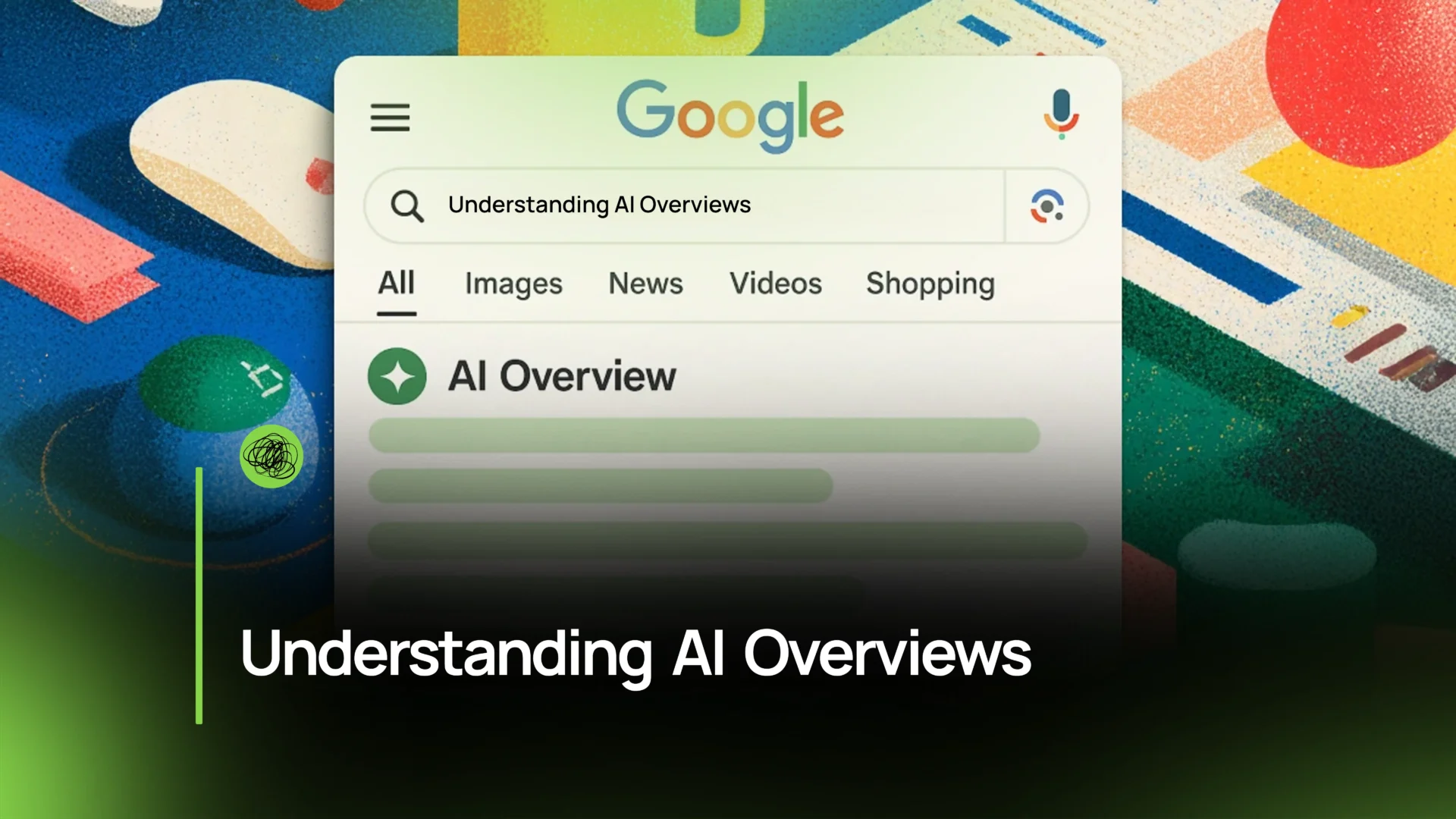
AI Overviews are Google’s AI-generated summaries placed right at the top of search results. They’re designed to give users instant answers (or instant context) without needing to click through a dozen pages.
We’re talking:
- Smart summarization
- Real-time interpretation
- Context-driven responses
- Multi-source synthesis
They’re basically Google’s new way of saying:
“Why scroll when I can spoon-feed you the internet?”
Key Features and Functionality
AI Overviews aren’t your average featured snippets. Think of them as snippets that went through a growth spurt, got a scholarship, and now confidently wear glasses they don’t need.
Let’s break down the main features.
1. Direct Answers
AI Overviews often provide immediate, concise answers to simple and moderately complex questions.
You search “What’s technical SEO?” and BOOM—Google gives you a definition before your coffee finishes dripping.
This makes life easier for users… and trickier for websites, because you now need to think about ranking inside the overview, not just below it.
2. Complex Queries
This is where AI Overviews flex hard.
Traditional search struggled with nuanced or multi-step queries like:
- “How do I create a content strategy for my ecommerce brand?”
- “What tools do I need for a technical SEO audit?”
- “How do AI Overviews affect ranking signals?”
AI Overviews interpret the context, break down components, and deliver multi-layered responses.
In other words: it’s not just answering questions.
It’s answering questions the way humans wish search engines had done for the last decade.
3. Contextual Understanding
AI Overviews take your entire query—and sometimes your search history—into account.
It knows when “jaguar” means an animal versus a luxury car versus that weird 90s operating system no one wants to talk about.
This contextual layer means your content needs to be clearer, more structured, and more semantically rich than ever before.
4. Source Citations
Here’s the plot twist that keeps SEOs awake at night:
AI Overviews cite websites.
Yep—they pull from content they consider trustworthy, expert-driven, well-structured, and contextually aligned.
If your site lands in these citations, congratulations:
You’ve just been pushed to the top without paying for ads or sacrificing your dignity to the algorithm gods.
If not… then keep reading because Thinkster has your back.
5. Visuals
AI Overviews also incorporate:
- Images
- Carousels
- Videos
- Charts
- Step-by-step instructions
This transforms the results page into a multimedia AI-powered display board.
Optimizing text isn’t enough anymore—your visuals need metadata steroids.
How Do AI Overviews Work?
Let’s peel back the curtain.
AI Overviews combine:
- Google’s core search algorithms
- Machine learning
- Natural language understanding
- Multimodal AI
- The Knowledge Graph
- Pre-trained LLMs (large language models)
Here’s the simplified version (because we value your mental health):
- User submits a query.
- Google evaluates intent, context, history, and semantic structure.
- It gathers relevant pieces from top-performing, trustworthy content.
- AI synthesizes everything into a neat, readable, structured explanation.
- It displays it like a proud parent showing off a science fair project.
Google claims AI Overviews are grounded in trustworthy sources, and while that makes SEOs feel both flattered and terrified, it means your content strategy must be precision-grade.
How Does AIO Impact SEO?
Here’s where things get interesting.
AI Overviews are not just a feature—they’re a shake-up.
A digital earthquake.
A “we’re not in Kansas anymore” situation.
Here are the major impacts:
Reduced clicks for basic queries
If the overview answers the question, many users won’t scroll.
Higher competition for real estate
You’re not just trying to be result #1 anymore—you’re trying to be quoted.
Demand for high-authority content
Expertise and topical depth matter more than ever.
Long-form content is winning
AI Overviews rely on deeply informative pages.
Stronger need for technical SEO
Clean markup, semantic HTML, structured data—Google loves it.
Shift from keyword stuffing to entity optimization
AIO cares more about concepts, relationships, and context.
Brand visibility changes
Some companies may appear in overviews without being the top-ranking organic result.
In other words, SEO is evolving into:
Search Experience Optimization.
And guess what?
Thinkster was built for exactly this future.
How to Optimize Your Website for AI Overviews
Ready for the good stuff?
Let’s talk strategy.
This is where Thinkster’s data-driven magic really shines.
1. Strengthen Topical Authority
AI Overviews favor trusted experts.
To become one:
- Publish comprehensive, in-depth content
- Build clusters and internal link structures
- Cover every angle of a topic, not just the primary keyword
- Answer related questions users might ask
Thinkster’s content frameworks make this ridiculously easy.
2. Improve Technical SEO Like It’s Your Day Job
Google loves organized digital closets.
Focus on:
- Clean site architecture
- Lightning-fast performance
- Schema markup everywhere
- Semantic tagging (H1, H2, H3 perfection)
- XML sitemaps
- Properly indexed pages
- Zero crawl errors
Need help?
Thinkster’s Technical SEO tools come with the digital equivalent of a power washer.
3. Optimize for Conversational Queries
AI Overviews handle natural language beautifully.
So write content that mirrors real human speech:
- Add FAQs
- Include long-tail conversational queries
- Explain concepts like you’re teaching your curious, slightly confused uncle
- Use structured, readable formatting
4. Beef Up E-E-A-T
Experience. Expertise. Authoritativeness. Trustworthiness.
Google loves these more than SEOs love coffee.
Boost them by:
- Adding author bios
- Citing sources
- Publishing case studies
- Earning high-quality backlinks
- Showcasing credentials
Thinkster’s white label SEO services help agencies amplify E-E-A-T at scale.
5. Provide High-Quality Visual Assets
If Google wants visuals, give Google visuals.
Optimize:
- Infographics
- Process diagrams
- Custom graphics
- Product photos
- Tutorial videos
Add alt tags, captions, structured data, and metadata.
6. Create AI-Ready Structured Content
Use:
- Lists
- How-to steps
- Bullet points
- Quick summaries
- Definitions
- Highlights
AI Overviews love to extract clean chunks from clean content.
7. Invest in Robust SEO Services
This isn’t optional anymore—SEO is now a multi-layered technical strategy that requires both creativity and machine-level precision.
Thinkster gives you:
- Technical SEO
- AI-powered content optimization
- Keyword strategy that actually makes sense
- White label SEO services
- Competitor intelligence
- Data analysis
- Content scoring
- Link-building solutions
Everything you need to win in the AI Overview era.
How to Track and Analyze AI Overviews
This is where most marketers panic.
Google hasn’t given us a shiny AIO dashboard (yet), so we need to get clever.
Here’s how to track your performance:
1. SERP Monitoring Tools
Use SEO platforms that detect AI Overview appearances for your keywords.
2. Rank Volatility Tracking
Measure when your rankings change before and after Overview launches.
3. Traffic Pattern Analysis
If clicks are dropping but impressions remain steady, AIO might be stealing attention.
4. Citation Tracking
Check regularly whether your URLs are being cited in Overviews.
5. A/B Testing Content Formats
Test different structures to see what Google loves most.
6. AI Overview Visibility Reports (Thinkster Exclusive)
Yep. We built tools for this exact purpose.
Conclusion
AI Overviews aren’t the end of SEO—they’re the evolution of it.
Google is getting smarter. Search is becoming conversational. Users want instant clarity.
This means brands need to step up: create deeper content, commit to technical excellence, and optimize for AI-driven experiences.
But here’s the good news:
You don’t have to figure this out alone.
Thinkster is built for exactly this moment—packed with SEO services, technical SEO tools, white label solutions, and AI-powered optimization that helps you rank in the Overview era and beyond.
AI Overviews are here.
The future of search is here.
And with Thinkster, you’re already ahead of the curve.
FAQs
1. What is the overview of all AI?
Artificial Intelligence refers to systems and algorithms capable of performing tasks that normally require human intelligence—like learning, reasoning, problem-solving, perception, and natural language understanding.
2. What are the 7 types of AI?
The seven common categories are:
- Narrow AI
- General AI
- Reactive machines
- Limited memory AI
- Theory of mind AI
- Self-aware AI
- Deep learning systems
3. What are 5 AI models?
Five widely known AI model types include:
- Machine learning models
- Neural networks
- Deep learning architectures
- Natural language processing models
- Generative models (like LLMs)
4. What are 5 uses of AI in daily life?
You interact with AI constantly through:
- Voice assistants
- Recommendation engines
- Spam filters
- Navigation apps
- Smart home devices
5. How do AI Overviews impact SEO?
AI Overviews influence click-through rates, ranking visibility, content structure, topical authority, and the overall importance of technical SEO. Optimizing for them ensures your site gets cited, featured, and ranked in this new AI-driven experience.