

Social media used to be simple. Post a picture, write a caption, add a few hashtags, and hope people liked it. But today? Social media is less “post and pray” and more analyze, optimize, dominate.
Welcome to the world of Social Media Analytics—where every like, comment, click, and scroll tells a story about your audience and your brand.
If Social Media Marketing is the engine that drives your online presence, Social Media Analytics is the dashboard telling you whether you’re speeding toward growth or slowly drifting into digital obscurity.
Businesses today—from startups to global brands—use SMM Services and advanced analytics to understand what their audience wants, what content works, and how to convert engagement into revenue.
At Thinkster, we live by one golden rule: data beats guesswork every single time.
So if you’re wondering what Social Media Analytics really means and how to use it effectively, this guide breaks it down in a clear, practical, and slightly quirky way.
Introduction to Social Media Analytics
Let’s start with the basics.
Every action on social media creates data.
Someone liked your Instagram post.
Someone shared your LinkedIn article.
Someone clicked your Facebook ad but didn’t buy.
All of that behavior forms a massive pool of information.
Social Media Analytics is the process of collecting, measuring, and analyzing that data to understand how your content and campaigns are performing.
Think of it like this:
Without analytics → Social media is guesswork.
With analytics → Social media becomes a growth strategy.
Businesses working with a Social Media Marketing Company In Bangalore, a Social Media Marketing Agency In Mumbai, or a Social Media Marketing Agency In Hyderabad rely heavily on analytics to improve performance and reach the right audience.
Analytics helps answer questions like:
- Which posts are performing best?
- What type of Social Media Graphics attract the most engagement?
- When is your audience most active?
- Which platform generates the most leads?
Instead of guessing what your audience likes, Social Media Analytics shows you the proof.
And that’s where the magic begins.
What is Social Media Analytics?
In simple terms, Social Media Analytics refers to the practice of tracking and analyzing social media data to measure the performance of your marketing activities.
It involves monitoring metrics such as:
- Engagement
- Reach
- Clicks
- Conversions
- Audience growth
But it goes beyond numbers.
The real goal of Social Media Analytics is to turn raw data into meaningful insights.
For example:
A post may receive thousands of impressions but very few clicks. That tells you the content grabbed attention but failed to inspire action.
Another post might generate fewer views but high social media engagement, which suggests the audience found it valuable.
Smart marketers combine these insights with Social Media Marketing Trends to create better campaigns.
Businesses partnering with a Social Media Marketing Agency In Delhi or other major cities often rely on analytics dashboards to measure campaign success in real time.
The takeaway?
Analytics transforms social media from a creative experiment into a measurable business strategy.
Key Metrics Used in Social Media Analytics
To understand how well your Social Media Marketing efforts are performing, marketers track specific metrics. These metrics provide insights into audience behavior and campaign performance.
Let’s break down the most important ones.
Engagement Metrics (likes, comments, shares)
Engagement metrics measure how people interact with your content.
These include:
- Likes
- Comments
- Shares
- Saves
- Reactions
High engagement usually means your content resonates with your audience.
For example, visually appealing Social Media Graphics often perform better because they capture attention quickly.
Engagement also plays a major role in platform algorithms. The more engagement a post receives, the more likely it is to be shown to a wider audience.
At Thinkster, engagement data often reveals what type of storytelling works best for a brand.
Reach and Impressions
Reach and impressions measure visibility.
Reach refers to the number of unique users who saw your content.
Impressions refer to the total number of times the content was displayed.
For example:
If one person sees your post three times, that equals:
- Reach = 1
- Impressions = 3
Tracking these numbers helps businesses understand how effectively their SMM Services are expanding brand visibility.
Follower Growth Rate
Follower growth rate shows how quickly your audience is expanding.
It measures how many new followers you gain over time.
A consistent growth rate indicates that your content strategy is attracting the right audience.
However, rapid growth without engagement could mean the followers are not genuinely interested in your brand.
Analytics helps identify whether your Social Media Marketing strategy is building a meaningful audience or just vanity numbers.
Click-Through Rate (CTR)
Click-through rate measures how many people clicked a link after seeing your content.
For example:
If 1000 people see your post and 50 click the link, your CTR is 5%.
This metric is crucial for campaigns designed to drive traffic to websites, landing pages, or product pages.
Many brands working with a Social Media Marketing Agency In Hyderabad track CTR closely to measure how effectively social media drives website visits.
Conversion Rate
Conversion rate is where the real business impact happens.
It measures how many users completed a desired action, such as:
- Making a purchase
- Filling out a form
- Signing up for a newsletter
- Booking a consultation
Conversions connect Social Media Marketing efforts directly to revenue.
At Thinkster, campaigns are optimized continuously using analytics to ensure engagement eventually leads to measurable business growth.
Benefits of Using Social Media Analytics
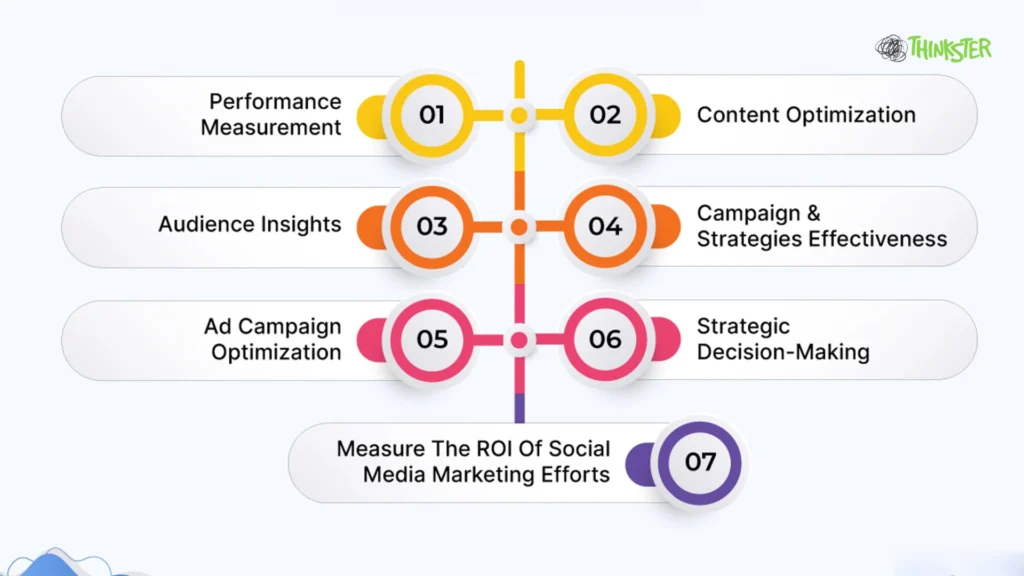
Why does Social Media Analytics matter so much?
Because it transforms marketing from random posting into strategic growth.
Here are the key benefits.
Better Content Strategy
Analytics reveals which types of content perform best.
You might discover that:
- Educational posts get more shares
- Videos generate higher engagement
- Infographics attract more clicks
By analyzing performance, brands can create more of what works.
For example, if certain Social Media Graphics consistently outperform text posts, that insight shapes future content planning.
Over time, this improves the effectiveness of your Social Media Marketing strategy.
Improved Audience Understanding
One of the most powerful aspects of Social Media Analytics is audience insight.
Analytics tools provide data about:
- Audience demographics
- Interests
- Online behavior
- Active hours
Understanding your audience allows businesses to create personalized campaigns.
Brands working with a Social Media Marketing Company In Bangalore often use audience insights to craft hyper-targeted campaigns that resonate with specific customer groups.
Higher Marketing ROI
Marketing budgets matter.
Without analytics, brands may spend money on campaigns that don’t work.
With Social Media Analytics, businesses can:
- Identify high-performing campaigns
- Stop ineffective ones
- Optimize ad spending
The result?
Higher return on investment.
This is one reason many businesses partner with agencies offering professional SMM Services.
Data-Driven Decision Making
The biggest advantage of analytics is clarity.
Instead of asking:
“Do we think this content works?”
Marketers can ask:
“What does the data say?”
Data-driven marketing removes emotional bias and replaces it with measurable insights.
That’s how brands stay competitive in a rapidly evolving digital landscape.
How to Use Social Media Analytics Effectively
Knowing the metrics is one thing. Using them effectively is another.
Here’s how businesses can make the most of Social Media Analytics.
Set Clear Social Media Goals
Before analyzing data, you must define clear goals.
Examples include:
- Increase brand awareness
- Improve engagement
- Drive website traffic
- Generate leads
Each goal requires tracking different metrics.
For instance, if the goal is awareness, reach and impressions matter most. If the goal is conversions, CTR and conversion rate become critical.
Clear objectives ensure analytics supports real business outcomes.
Track the Right Metrics
Not every metric matters equally.
Vanity metrics like likes can look impressive but may not drive business growth.
Instead, businesses should focus on meaningful indicators such as:
- Engagement rate
- Click-through rate
- Conversion rate
- Audience growth
A strong Social Media Marketing strategy prioritizes metrics aligned with business goals.
Analyze Audience Behavior
Analytics reveals how audiences behave on different platforms.
For example:
Instagram audiences may prefer visual storytelling, while LinkedIn audiences may engage more with professional insights.
Brands working with a Social Media Marketing Agency In Mumbai often analyze audience behavior to customize strategies for each platform.
This ensures content resonates with the right audience in the right format.
Optimize Content Strategy Based on Insights
Analytics is not just about tracking performance—it’s about improving it.
Businesses should regularly review their analytics and ask:
- Which posts performed best?
- Which time slots generated the most engagement?
- Which topics attracted the most attention?
These insights help refine future campaigns.
Over time, analytics-driven optimization leads to stronger engagement and better marketing results.
What are the Best Social Media Analytics Tools?
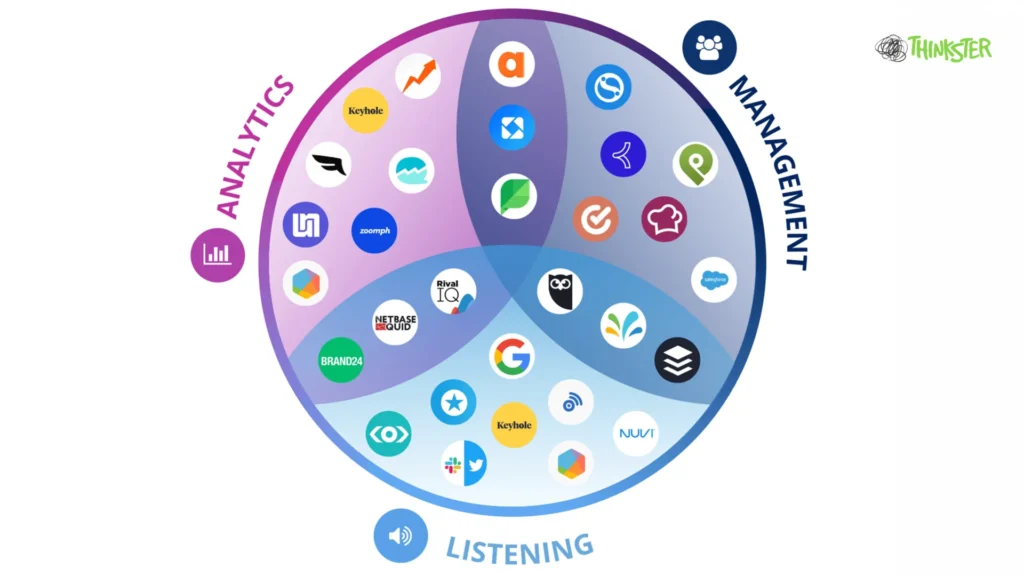
Several tools help businesses measure and analyze their social media performance.
Some of the most popular ones include:
Native Platform Analytics
Most social platforms offer built-in analytics dashboards.
Examples include:
- Instagram Insights
- Facebook Analytics
- LinkedIn Analytics
These tools provide basic performance metrics.
Third-Party Analytics Tools
Advanced tools offer deeper insights and reporting features.
Popular options include:
- Hootsuite
- Sprout Social
- Buffer Analytics
- Google Analytics (for tracking social traffic)
These tools help marketers combine data from multiple platforms in one place.
At Thinkster, we often integrate analytics tools with campaign dashboards to create a unified performance view for clients.
This allows businesses to measure results across multiple cities, whether they work with a Social Media Marketing Agency In Delhi or teams managing campaigns nationwide.
Conclusion
Social media is no longer just about posting content.
It’s about understanding what works, why it works, and how to make it work even better.
That’s exactly what Social Media Analytics enables.
By tracking performance metrics, analyzing audience behavior, and optimizing campaigns based on data, businesses can turn social media into a powerful growth engine.
Brands that embrace analytics gain a competitive advantage because they make decisions based on evidence rather than assumptions.
At Thinkster, we combine creativity with data-driven strategy to help brands unlock the full potential of Social Media Marketing.
Because in today’s digital world, success isn’t just about being visible.
It’s about being strategic, measurable, and unstoppable.
FAQs
1. What tools are used for social media analytics?
Common tools include Instagram Insights, Facebook Analytics, LinkedIn Analytics, Hootsuite, Sprout Social, and Google Analytics. These platforms help track engagement, reach, audience growth, and campaign performance.
2. What is the difference between social media insights and analytics?
Social media insights refer to basic data provided by platforms about post performance and audience behavior. Social Media Analytics goes deeper by analyzing trends, patterns, and campaign performance to generate strategic insights.
3. How do beginners start using social media analytics?
Beginners should start by defining clear goals, tracking key metrics like engagement and reach, and regularly reviewing analytics dashboards provided by social media platforms.
4. Which metrics are most important in social media analytics?
The most important metrics include engagement rate, reach, impressions, click-through rate, and conversion rate. The priority depends on your marketing objectives.
5. Why Social Media Analytics Matters for Businesses
Social Media Analytics helps businesses understand their audience, improve content strategies, measure campaign performance, and increase return on investment. Without analytics, social media marketing becomes guesswork rather than a measurable growth strategy.