

Let’s be honest—most websites don’t fail because they look bad. They fail because they’re confusing. Pages buried five clicks deep. Menus that feel like escape rooms. URLs that look like keyboard smash accidents. That’s not a design problem—that’s a Website Architecture problem.
Website architecture is the invisible blueprint that decides whether your site feels smooth and intuitive… or like a maze designed by someone who hates visitors. At Thinkster, we like to say: great websites aren’t just designed, they’re engineered to make sense. And that engineering starts with solid site architecture.
In this guide, we’re breaking down what website architecture really is, why it matters (a lot) for users and SEO, and the best practices you should follow if you want Google and humans to fall a little bit in love with your website. We’ll keep it quirky, practical, and zero-fluff—because that’s how we roll.
What Is Website Architecture?
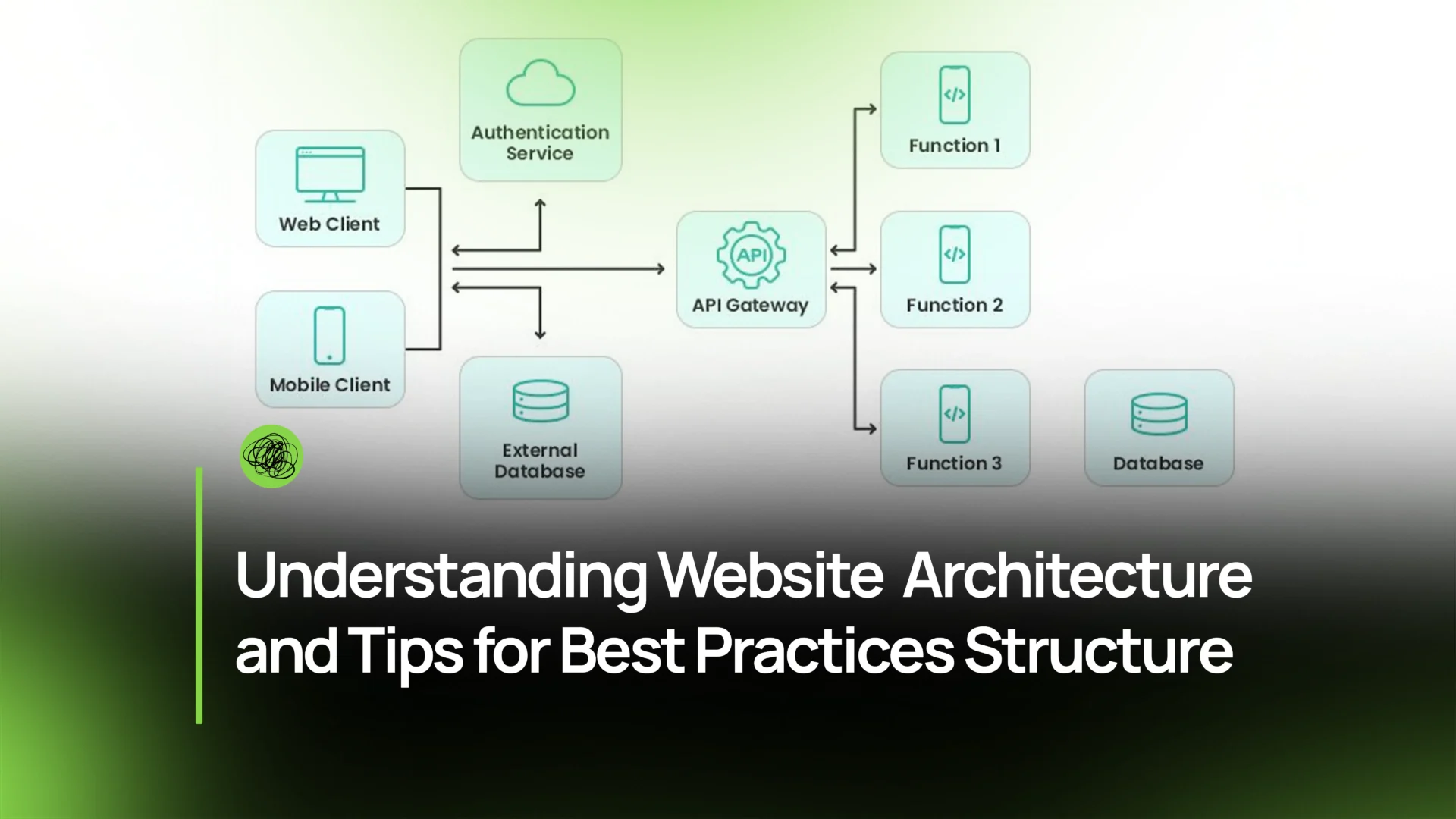
Website Architecture refers to how your website’s pages are structured, connected, and organized. Think of it as the master plan behind your site—how information flows, how users navigate, and how search engines crawl and understand your content.
If Custom Website Design is how your site looks, website architecture is how it works.
It defines:
- How pages are grouped
- How users move from one page to another
- How content is prioritized
- How search engines interpret your site
In simple terms, website architecture answers three critical questions:
- Can users find what they’re looking for easily?
- Can search engines crawl and index your pages efficiently?
- Does the structure support growth, updates, and scalability?
If you’re wondering How Website Development Works behind the scenes, architecture is one of the first and most important steps—long before visuals, colors, or animations enter the chat.
Key Components of Website Architecture
A strong site architecture is built on a few foundational pillars. Miss one, and the whole structure starts wobbling.
Hierarchy
Hierarchy defines the order of importance on your website. Your homepage sits at the top, followed by category pages, then subcategories, and finally individual content or product pages.
A clear hierarchy helps users understand where they are—and helps Google understand which pages matter most. This is especially crucial in ecommerce website development, where hundreds (or thousands) of product pages need logical grouping.
No hierarchy = chaos. And chaos never converts.
Navigation
Navigation is how users experience your site architecture. Menus, footers, dropdowns, and mobile navigation all play a role.
Good navigation feels obvious. Bad navigation feels like a puzzle no one asked to solve.
At Thinkster, our Website Design Services focus heavily on intuitive navigation because if users can’t find things quickly, they leave—even if your design is stunning.
Internal Linking
Internal links are the roads connecting your pages. They guide users, distribute authority, and strengthen website architecture in SEO.
A smart internal linking strategy helps:
- Reduce bounce rates
- Improve crawlability
- Strengthen topical relevance
This is where site structure for SEO really starts pulling its weight.
URL Structure
Clean URLs aren’t just pretty—they’re powerful.
Good example:
/services/custom-website-design/
Bad example:
/page-id-1293?ref=abc123
Simple, descriptive URLs improve trust, usability, and rankings. They’re a small detail with a big impact on website architecture design.
Benefits of Good Website Architecture
A well-structured website isn’t just “nice to have.” It’s a competitive advantage.
Improved SEO
Search engines love clarity. A logical site architecture makes it easier for bots to crawl, index, and rank your pages.
Strong website architecture in SEO means:
- Faster indexing
- Better keyword distribution
- Stronger topical authority
This becomes even more critical during Website Migration Services, where poor architecture can tank rankings overnight if not handled properly.
Better User Experience (UX)
UX isn’t just about visuals—it’s about flow. When users can move seamlessly through your site, engagement goes up and frustration goes down.
Good architecture ensures:
- Fewer clicks to key pages
- Clear paths to conversion
- Consistent experiences across devices
Which is exactly why Thinkster designs architecture before aesthetics.
Enhanced Authority
A well-organized website signals credibility. It shows users—and search engines—that you know your stuff and take your brand seriously.
Authority isn’t built by shouting. It’s built by structure.
Best Practices for Website Architecture
Now for the good stuff. These are the best practices we follow at Thinkster when crafting high-performing websites.
Create a simple top-level navigation menu
Your main menu should highlight only the most important pages. Less is more.
If everything is important, nothing is.
Keep your URLs simple and user-friendly
Readable URLs build trust and boost SEO. They should clearly reflect page content without unnecessary parameters.
Model your website architecture after the top players in your industry
Industry leaders didn’t guess their structure—they tested it. Analyze competitors and adapt what works to your own website architecture design.
Keep your website consistent
Consistent layouts, naming conventions, and navigation reduce cognitive load and improve usability.
Consistency = confidence.
Implement the pillar-cluster internal linking model
Create core “pillar” pages and support them with related cluster content. This strategy strengthens site structure for SEO and positions your site as a topical authority.
Provide access to most of your website’s pages in 3–4 clicks
If a page is buried too deep, it might as well not exist. Flat architecture improves both UX and crawl efficiency.
Use breadcrumbs
Breadcrumbs improve navigation, help users understand hierarchy, and add extra context for search engines.
Small feature. Big clarity boost.
Create an HTML and XML sitemap
HTML sitemaps help users. XML sitemaps help search engines. Together, they’re architecture MVPs—especially during Website Migration Services or major redesigns.
Upgrade Your Website Architecture to Drive Better SEO Performance
If your traffic has plateaued, conversions feel stuck, or Google seems unimpressed—your Website Architecture might be the bottleneck.
At Thinkster, we don’t just redesign websites—we re-engineer them. Our Custom Website Design and Website Design Services focus on structure-first thinking, ensuring your site scales smoothly, ranks better, and converts faster.
From startups to enterprise-level ecommerce website development, we build architectures that grow with your business—not against it.
Conclusion
Website architecture isn’t glamorous—but it’s powerful. It’s the difference between a website that exists and a website that performs.
A smart site architecture improves SEO, enhances UX, strengthens authority, and future-proofs your digital presence. And when paired with intentional design and strategy, it becomes a serious growth engine.
If you’re ready to stop guessing and start building websites that actually work—Thinkster’s got you.
FAQs
1. What are the 4 types of website structure?
The four common types are hierarchical, sequential, matrix, and database-driven structures. Most modern websites use a hybrid approach.
2. What are the 5 golden rules of web design?
Clarity, consistency, simplicity, accessibility, and responsiveness. Architecture supports all five.
3. What is the 60 30 10 rule in UX?
It’s a color rule where 60% is the primary color, 30% secondary, and 10% accent—used to create visual balance.
4. Why is website architecture important for SEO?
Because it helps search engines crawl, understand, and rank your content efficiently—making website architecture in SEO non-negotiable.
5. How is website architecture different from website design?
Architecture defines structure and flow; design defines visuals and aesthetics. One works behind the scenes—the other steals the spotlight. Both need each other to succeed.