

Let’s be honest—choosing between Custom Website Design vs Template is a bit like choosing between a tailor-made suit and something off the rack. Both will cover you. One will fit like a dream and quietly scream “premium,” while the other might do the job… until you raise your arm and hear a seam cry for help.
In today’s digital-first world, your website isn’t just a digital visiting card—it’s your salesperson, brand storyteller, lead generator, and sometimes your first impression and last chance. At Thinkster, where we live and breathe website design and development services, this debate comes up more often than “Should we add dark mode?”
So buckle up. We’re diving deep into Custom Website Design vs Template, breaking it down in plain English (with a side of Thinkster-style quirk), so you can make a smart, scalable, future-proof decision.
What is a Custom Website Design?
A Custom Website Design is built from scratch—no pre-set layouts, no “used by 10,000 other businesses” vibes. Every pixel, interaction, and line of code is crafted specifically for your brand, goals, and audience.
Think of it as architecture, not interior decoration. Custom websites focus on website architecture, user journeys, performance, scalability, and brand personality—all baked in from day one.
At Thinkster, when we design custom websites, we don’t start with colors or fonts. We start with questions like:
- How does your business actually work?
- What actions should users take?
- How will this website grow with you?
- How do Core Web Vitals in SEO factor into performance?
This is where How Website Development Works truly shines—strategy first, visuals second, performance always.
Custom websites are ideal for brands that want:
- A distinct digital identity
- Advanced functionality
- Optimized performance
- SEO-ready foundations
- Long-term scalability
In short: custom websites are built for your business, not adjusted to fit it.
What is a Website Template?
A website template is a pre-designed layout that you customize with your content, images, and brand colors. Think WordPress themes, Shopify templates, or pre-built UI kits.
Templates are popular because they’re:
- Quick to launch
- Budget-friendly
- Easy to manage (sometimes)
For startups and small businesses, templates often feel like a shortcut to getting online—and sometimes, they are. Especially when paired with decent website design and development services, templates can look good on the surface.
But here’s the catch: templates are designed for everyone, which means they’re optimized for no one specifically.
They often come with:
- Bloated code
- Limited flexibility
- Generic layouts
- Performance compromises
- SEO limitations
Templates aren’t bad. They’re just… not ambitious.
Key Differences Between Custom Websites and Templates
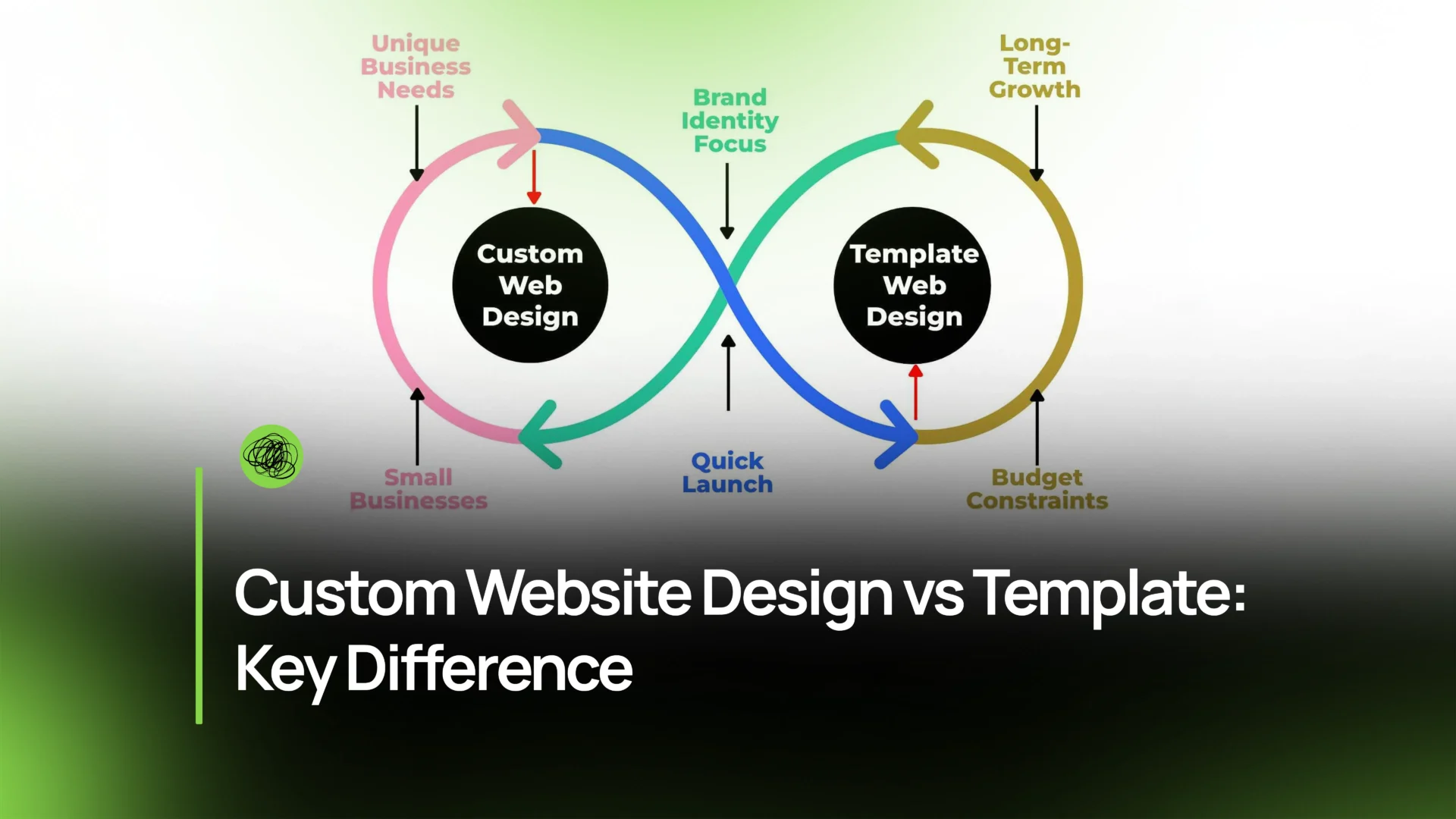
Now let’s get into the real showdown—Custom Website Design vs Template, feature by feature.
1. Design & Originality
Templates are like fast fashion. Trendy today, dated tomorrow. When hundreds (or thousands) of websites use the same layout, originality quietly exits the chat.
Custom website design? That’s couture.
With custom design:
- Your brand identity leads the design
- Visual hierarchy is intentional
- User experience is tailored
- You don’t look like your competitor’s twin
At Thinkster, we design websites that feel like the brand—not just display it. That’s a massive win for trust and recall.
2. Flexibility & Functionality
Templates work well—until you want something slightly different.
Need a custom booking flow? Advanced filters? A unique checkout experience for ecommerce website development? Templates will politely resist… and then break.
Custom websites are built for flexibility:
- Custom features without hacks
- Scalable architecture
- Clean integrations
- Smooth website migration services when you grow
If your business logic is unique (and let’s be real—most are), custom wins hands down.
3. Cost & Time
Templates win this round—on the surface.
Templates:
- Lower upfront cost
- Faster launch
- Minimal development effort
Custom websites:
- Higher initial investment
- Longer development cycle
- Strategic planning required
But here’s the Thinkster hot take: templates are cheaper now, custom is cheaper later.
Why? Because template sites often need:
- Frequent fixes
- Plugin overload
- Performance patches
- Redesigns sooner than expected
Custom websites are built once—and built right.
4. SEO & Performance
This is where Custom Website Design vs Template gets spicy.
Templates often come bloated with:
- Unused scripts
- Heavy CSS
- Plugin dependencies
That directly impacts Core Web Vitals in SEO, page speed, and rankings.
Custom websites are performance-first:
- Clean, optimized code
- Faster load times
- Better crawlability
- SEO-friendly structure
- Smarter website architecture
At Thinkster, we build custom sites with SEO baked in—not sprinkled on later like garnish.
Yes, template websites can rank. But custom websites are designed to dominate.
5. Maintenance & Security
Templates rely heavily on third-party plugins. More plugins = more updates = more vulnerabilities.
Custom websites:
- Have fewer dependencies
- Are easier to secure
- Are easier to maintain
- Reduce update-related breakage
Plus, when something goes wrong on a template site, good luck figuring out which plugin caused the chaos.
Custom sites are cleaner, calmer, and far less dramatic.
Custom vs.Template Websites: Pros and Cons
Let’s balance the scales.
Custom Website Design Pros:
- Unique brand identity
- Better performance
- SEO-optimized
- Scalable
- Tailored UX
- Ideal for ecommerce website development
Cons:
- Higher initial cost
- Longer development time
Template Website Pros:
- Affordable
- Quick launch
- Beginner-friendly
Cons:
- Limited customization
- Generic design
- Performance issues
- SEO constraints
- Scalability problems
No villain here—just different tools for different stages.
Custom Website vs Template: Which One to Choose?
This depends on where your business is going, not just where it is now.
Custom Website
Choose custom if:
- You want a strong brand identity
- SEO is a growth priority
- You need performance optimization
- You plan to scale
- You want future-ready website design and development services
This is Thinkster’s sweet spot. We build websites that grow with your business—not against it.
Website Template
Choose a template if:
- You’re validating an idea
- Budget is tight
- Speed matters more than uniqueness
- Your needs are simple (for now)
Templates can be a starting point—but rarely the destination.
Conclusion
The Custom Website Design vs Template debate isn’t about right vs wrong—it’s about fit.
Templates are great for getting online.
Custom websites are built for standing out, scaling up, and staying competitive.
At Thinkster, we don’t just design websites—we engineer digital foundations. Whether it’s ecommerce website development, performance-driven builds, or seamless website migration services, our approach blends creativity with strategy and speed with structure.
If your website is your business’s most valuable digital asset, shouldn’t it be designed like one?
FAQs
1. What is custom template design?
Custom template design is a hybrid approach—starting with a base template and heavily customizing it. While better than off-the-shelf templates, it still lacks the flexibility and performance of full custom builds.
2. What are the different types of website templates?
Common types include WordPress themes, Shopify templates, HTML templates, and page builder-based templates. Each varies in flexibility, performance, and scalability.
3. Is a template website good enough for a small business?
Yes, especially for early-stage businesses. But as traffic, SEO needs, and functionality grow, most businesses eventually outgrow templates.
4. Can template websites rank on Google?
Absolutely. But rankings depend heavily on optimization. Custom websites usually have an edge due to better Core Web Vitals in SEO and cleaner architecture.
5. Are custom websites better for user experience (UX)?
In most cases, yes. Custom websites are designed around user behavior, business goals, and data—not assumptions.
Still confused between Custom Website Design vs Template? That’s okay. Choosing a website is a big decision—and we love big decisions.
Let’s talk. Thinkster’s got your back.