
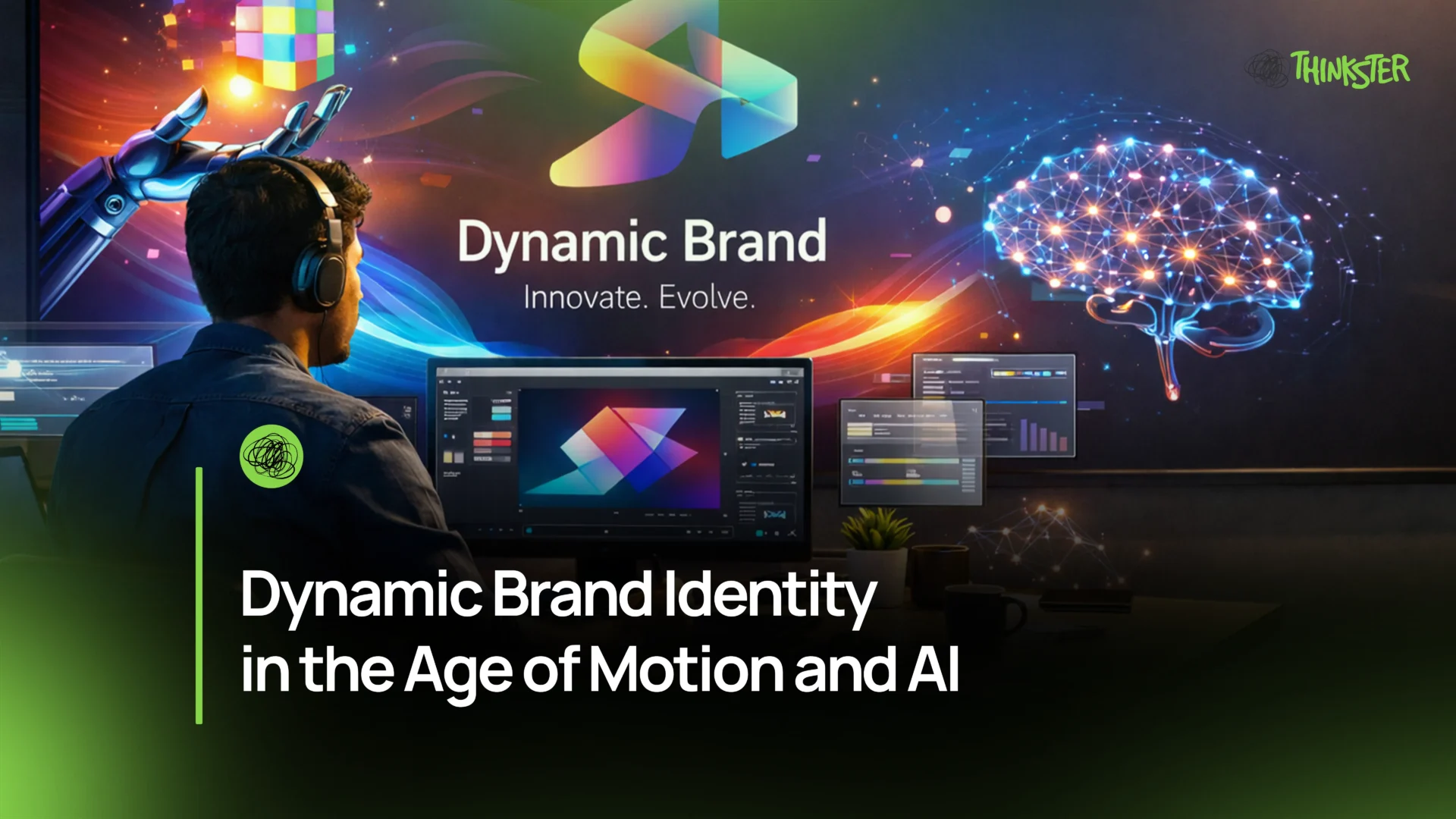

Welcome to the era where logos don’t sit quietly in the corner like introverted wallflowers—they dance, breathe, shapeshift, and algorithmically self-invent. In other words: Dynamic Brand Identity has entered the chat.
Static branding is sooo early-2000s. Today, audiences scroll at 200 mph, attention spans last roughly the length of a TikTok blink, and brands are expected to keep up. Cue dynamic identity—a brand system that flexes, adapts, and evolves without spiraling into chaos.
And if you’re wondering who’s leading the parade? Thinkster, of course. Because someone had to break the “logo must never move” rule, set it on fire (metaphorically), and replace it with something alive.
Let’s unravel this pixel party.
What Is Dynamic Brand Identity?
Dynamic Brand Identity is the glow-up of traditional branding—a flexible, evolving, AI-savvy identity system that changes based on context while keeping its core DNA intact.
It’s branding for a world where your logo might appear on a smartwatch screen, a VR environment, a YouTube ad, and a drone display all within the same afternoon.
Unlike static identities (which are beautifully dependable but also about as adaptable as a brick), dynamic identities respond to platforms, moods, campaigns, audiences, and even data.
It’s not just a look. It’s a performance.
Key Aspects of a Dynamic Brand Identity Include:
Adaptability & Flexibility
A dynamic identity flexes like a gymnast. It can shift colors, layouts, patterns, or movement based on context without breaking brand recognition.
Different platform? No problem. Different demographic? Easy. Different message, vibe, or cultural moment? Bring it on.
It’s the brand equivalent of wearing the perfect outfit for every event—without losing your sense of self.
Core Consistency
Before you panic: no, dynamic identity is not visual anarchy. The magic rule is flexibility around a stable core.
The core might be:
- A signature shape
- A unique color palette
- A motion style
- A recognizable typographic structure
- A generative rule set
This foundational DNA ensures that no matter how playful or adaptive the identity becomes, it’s unmistakably you.
Generative/Algorithmic Design
Here’s where things get deliciously futuristic.
Dynamic identities often use:
- AI models
- Generative design systems
- Algorithmic parameters
- Motion frameworks
These tools create infinite variations—patterns, animations, colorways—based on rules set by brand strategists and designers.
The result: a brand that feels alive and computationally intelligent.
How Does Dynamic Identity Work?
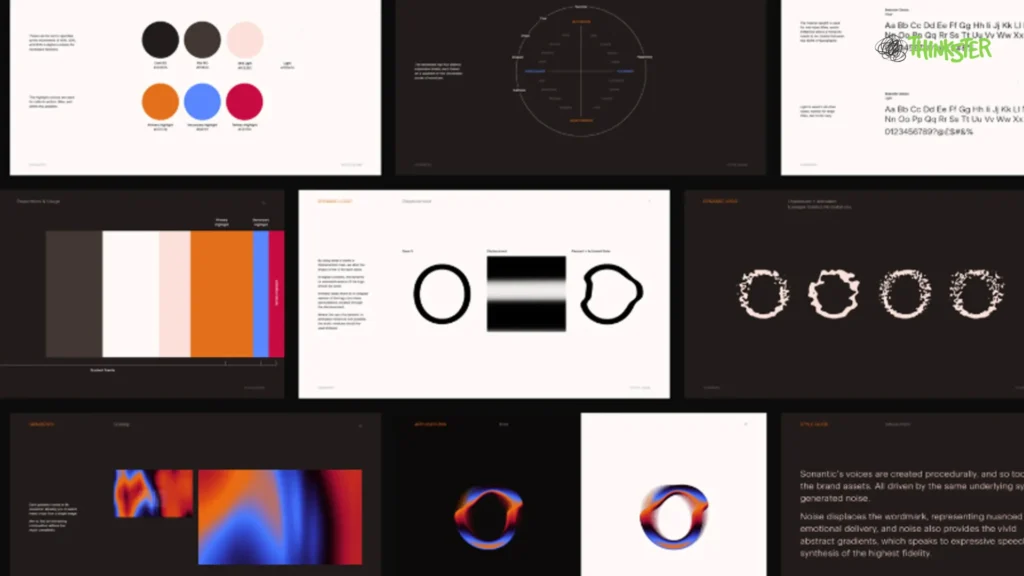
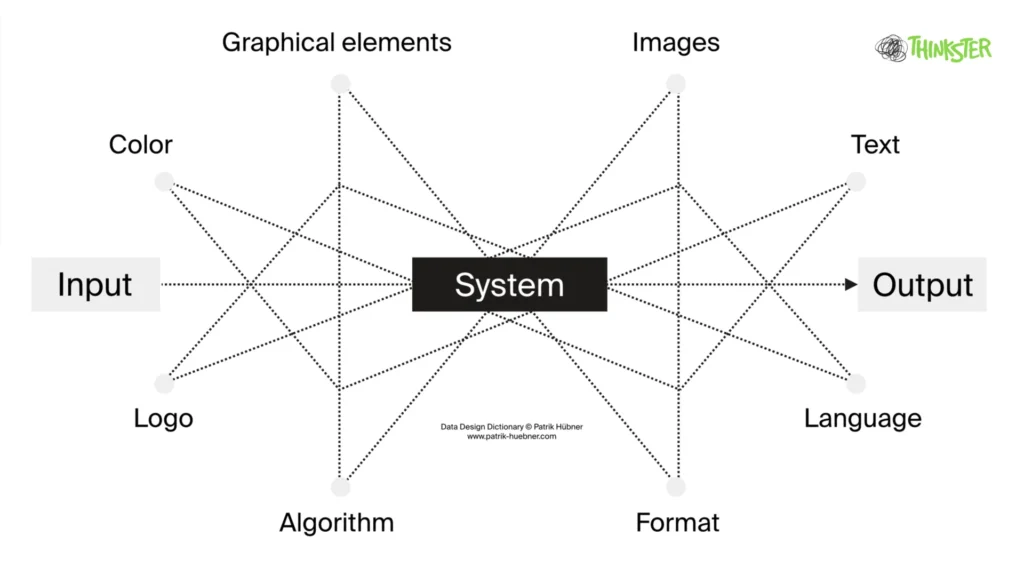
Dynamic identity isn’t random creativity—it’s “controlled spontaneity.”
Here’s the basic formula Thinkster loves:
- Define the brand DNA
(Visual constants, tone, motion behavior) - Create an adaptable system
(Color modes, responsive shapes, context-based variations) - Add motion, interactivity, or generative logic
(Your logo gains superpowers) - Allow the brand to respond to context
Social media post? App onboarding? Billboard? AI personalization?
The identity adapts accordingly. - Maintain consistent emotional impact
Whether static or animated, the brand should evoke the same vibe.
This blend of structure and freedom creates an identity that feels cohesive yet effortlessly adaptive—kind of like having a wardrobe full of outfits but always looking unmistakably like you.
Benefits of Dynamic Brand Identity
Increased Engagement and Loyalty
Humans love novelty—but they also crave familiarity.
Dynamic identity gives audiences both.
- Moving identities catch attention.
- Adaptive visuals feel fresh.
- Personalized brand expressions build emotional connection.
Instead of being a static stamp, your brand becomes a character.
Adaptation Across Platforms
Every platform has its own speed, culture, and visual expectations.
Dynamic identities thrive because they can:
- Scale up or down
- Move or simplify
- Change formats instantly
- Adjust tone for different audiences
Your brand becomes universally fluent, whether it’s on a business card or inside a gaming interface.
Business Benefits
Let’s talk bottom line.
Dynamic identity:
- Keeps branding relevant longer
- Reduces rebranding cycles
- Enhances digital campaign performance
- Increases perceived innovation
- Boosts recognition through distinctive motion and behavior
- Strengthens competitive differentiation
Basically, it’s brand evolution without the expensive identity crisis.
Examples of a Successful Dynamic Brand Identity
1. Thinkster
Thinkster is the poster child for dynamic identity—not because we’re biased (okay, maybe a little), but because the brand itself behaves like a creative organism.
Thinkster’s identity embraces motion, algorithmic variations, adaptive patterns, and contextual morphing. It’s built to evolve alongside the rapidly shifting branding landscape. The result: a living brand system that feels smart, expressive, and undeniably modern.
2. Google
Known for its ever-changing doodles, contextual color play, and motion-ready design, this brand set the modern standard for flexible identities long before it became cool.
The logo is simple. The behavior? Endlessly adaptive.
3. Coca-Cola
Surprised? Don’t be. Although the iconic script remains consistent, the brand constantly plays with animated ribbons, evolving campaign visuals, and generative patterns—especially in digital campaigns.
A lesson: dynamic doesn’t mean replacing the iconic logo—it means energizing it.
4. Airbnb
The “Bélo” symbol sits at the center of a flexible ecosystem of illustrations, motion assets, and generative patterns that adapt to different cultures and contexts. A static symbol with a dynamic supporting universe—chef’s kiss.
5. MTV
The OG of dynamic identity. MTV pioneered the idea in the ’80s and ’90s, with a logo that changed styles, textures, animations—whatever the creative team dreamed up. It walked so modern dynamic brands could run.
Conclusion
Dynamic Brand Identity is no longer experimental—it’s essential.
Brands today must be:
- Adaptive
- Motion-ready
- Algorithmically intelligent
- Culturally responsive
- Platform fluent
- Context aware
This is branding beyond a logo. It’s branding as behavior.
And if you’re thinking this sounds overwhelming to build—don’t worry. This is literally what Thinkster does: architecting living brand systems that evolve, adapt, and thrive in an AI-driven world.
Your brand deserves to move.
Your identity deserves to breathe.
Your visuals deserve to evolve.
Welcome to the new era. Let’s build your dynamic brand identity.
FAQs
1. How is dynamic brand identity different from a traditional logo?
A traditional logo is static—it looks the same everywhere.
A dynamic brand identity adapts its form, color, motion, or patterns based on context while keeping core elements consistent.
Same soul. Different outfits.
2. Why are brands moving toward dynamic brand identity?
Because audiences are faster, digital platforms are diverse, and attention is fleeting. Dynamic identities increase adaptability, relevance, engagement, and memorability.
Plus, they look way cooler.
3. How does AI contribute to dynamic brand identity?
AI enables:
- Generative design systems
- Adaptive visual outputs
- Personalized brand experiences
- Algorithmic animation patterns
Essentially: AI helps brands express infinite creativity while maintaining structure.
4. What are the key components of a successful dynamic brand identity?
The essentials are:
- A strong core identity
- Flexible visual rules
- Motion or behavioral logic
- Adaptable color/shape systems
- Consistency in emotional impact
Build the skeleton. Let the muscles move.
5. Can small businesses implement dynamic brand identity?
Absolutely—dynamic identity isn’t just for mega-brands.
Small businesses benefit from flexibility, modern appeal, and digital relevance. With the right strategy (hello, Thinkster), Branding Services even small brands can build systems that stand out and stay fresh for years.